Burlington Northern Railroad Easements on Lake Whatcom's North Shore: What Property Owners Need to Know
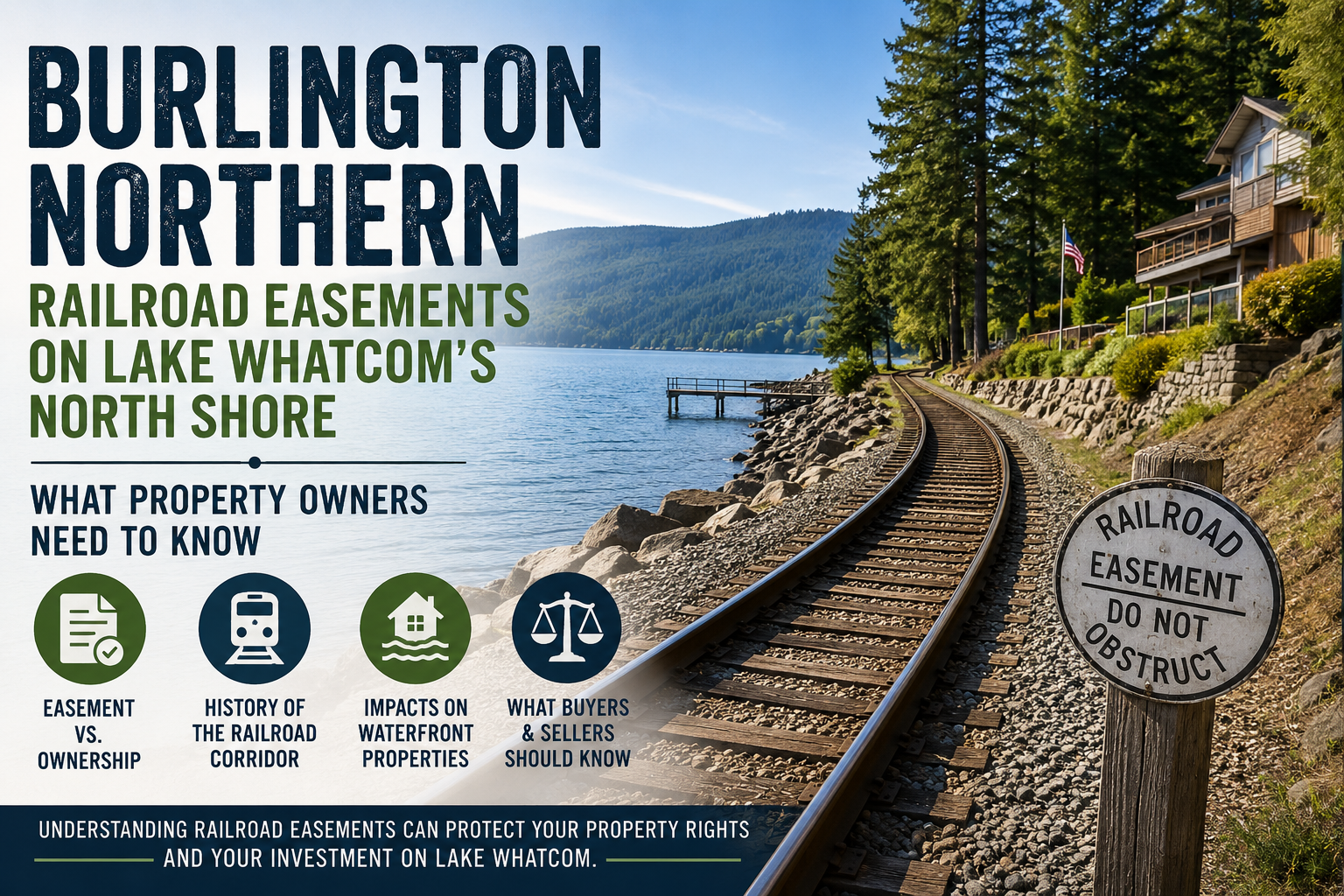
If you've ever looked at a waterfront property on the North Shore of Lake Whatcom, you may have noticed references to railroad easements in the title report. Many homeowners and buyers are surprised to learn that portions of the former Burlington Northern railroad corridor still impact property rights along the lake today.
As a local real estate broker, I've had clients ask whether the railroad still owns land along the shoreline, whether they can build improvements, and how these easements affect property values. Here's what every Lake Whatcom property owner should know.
A Brief History of the Railroad Along Lake Whatcom
The railroad line running along the north shore of Lake Whatcom dates back to the early 1900s. Built by predecessors to the Northern Pacific Railroad and later operated by Burlington Northern, the line connected Bellingham to communities east of the lake and served logging, mining, and freight operations throughout Whatcom County.
For decades, trains traveled along the shoreline carrying timber and other goods. While regular freight operations largely disappeared years ago, the railroad corridor continues to affect ownership rights for many waterfront properties.
Easement vs. Ownership: The Critical Difference
One of the biggest misconceptions among property owners is that the railroad owned all of the land beneath its tracks.
In many locations around Lake Whatcom, the railroad obtained only a railroad easement rather than outright ownership of the property. This distinction is important because:
-
The underlying land ownership often remained with the adjacent property owner.
-
The railroad retained the right to operate and maintain railroad facilities within the corridor.
-
Property owners could not interfere with railroad uses inside the easement area.
Washington courts have addressed this issue in several cases involving Lake Whatcom properties, with rulings that certain railroad deeds created easements rather than transferring full ownership.
Does Burlington Northern Still Have Easement Rights Today?
The answer depends on the specific property.
Over the years, portions of the railroad corridor have been:
-
Abandoned
-
Sold
-
Converted to public trail use
-
Transferred to successor railroad entities
-
Subject to legal disputes regarding ownership rights
Some railroad easements may have terminated through legal abandonment, while others continue to exist. The status often varies from parcel to parcel.
This is why a title report alone may not tell the entire story. Historical deeds, railroad documents, surveys, and court decisions may all need to be reviewed to determine the current status of a railroad easement.
How Railroad Easements Can Affect Lakefront Properties
For homeowners and buyers, railroad easements can impact:
Shoreline Access
A railroad easement may separate the upland portion of a property from the waterfront portion. While owners often retain rights to use the land, certain improvements may be restricted.
Building Improvements
Projects such as:
-
Stairs
-
Pathways
-
Landscaping
-
Fencing
-
Utility installations
may require additional review if they are located within an easement area.
Property Value
Most buyers are understandably cautious when they see easements affecting waterfront property. While many easements create little practical impact, uncertainty can influence marketability and value.
Title Insurance
Title reports for North Shore properties frequently contain exceptions related to historic railroad rights. Buyers should carefully review these exceptions before closing.
Why This Matters for Buyers and Sellers
Lake Whatcom waterfront properties command premium prices, making it especially important to understand exactly what rights come with the property.
Before purchasing a North Shore home, buyers should consider:
-
Reviewing the title commitment carefully
-
Obtaining a survey if boundaries are unclear
-
Understanding whether the railroad interest is an easement or fee ownership
-
Consulting with a real estate attorney when necessary
For sellers, proactively understanding the status of any railroad easement can help avoid surprises during escrow and provide confidence to potential buyers.
Thinking About Buying or Selling on Lake Whatcom?
Every waterfront property is unique. Two neighboring homes may have completely different railroad easement histories and legal rights.
If you're considering buying or selling property on Lake Whatcom's North Shore, understanding the impact of historic Burlington Northern railroad easements is an important part of due diligence.
A careful review of title records, surveys, and historical documents can help clarify ownership rights and protect your investment.
Need Help Understanding a Specific Property?
If you're looking at a property on North Shore Drive, Agate Bay, Geneva, or elsewhere around Lake Whatcom and have questions about railroad easements, feel free to reach out. I regularly help buyers and sellers navigate unique title issues and waterfront property concerns throughout Whatcom County.
Briddick Webb | Lake Whatcom Real Estate Specialist
Managing Broker | RE/MAX Whatcom County
Categories
Recent Posts