Securities-Backed Lines of Credit (SBLOC): How to Use Your Investments to Buy a Home Without Selling Your Stocks
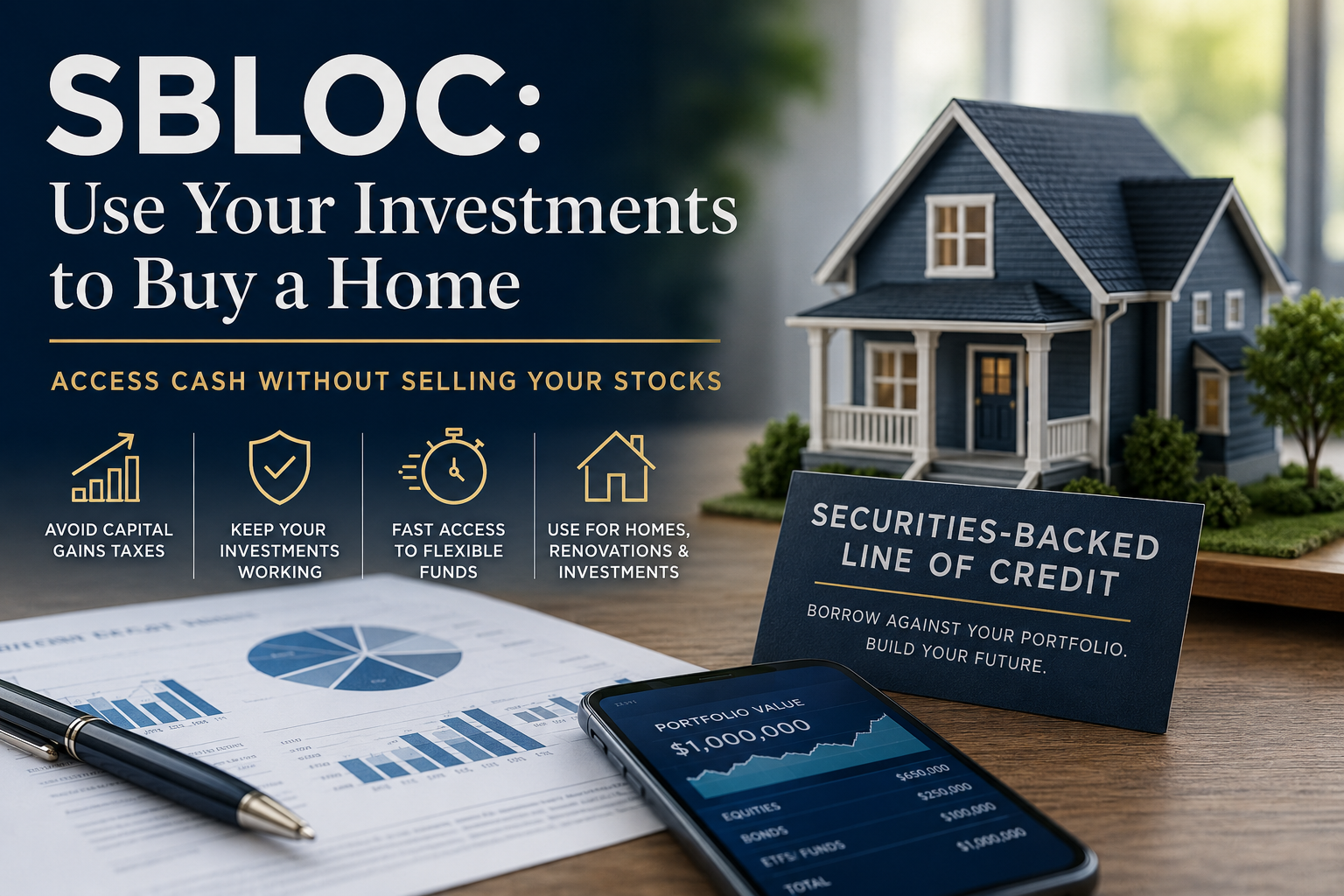
Imagine finding your dream home but realizing most of your wealth is tied up in stocks and investments. You could sell investments to access cash—but doing so may trigger capital gains taxes, disrupt your long-term investment strategy, and potentially cause you to miss future market growth.
That's why many affluent investors are turning to a lesser-known financing tool: the Securities-Backed Line of Credit (SBLOC).
An SBLOC allows you to borrow against your investment portfolio without selling your stocks. For the right borrower, it can be a powerful way to access liquidity while keeping investments working for the future.
In this guide, we'll explore what an SBLOC is, how it works, the advantages and risks, and whether it makes sense when buying a home.
What Is a Securities-Backed Line of Credit (SBLOC)?
A Securities-Backed Line of Credit (SBLOC) is a revolving line of credit that uses your investment portfolio as collateral.
Instead of selling stocks, ETFs, mutual funds, or other eligible securities, you pledge them to a lender who then extends a line of credit based on the value of those assets.
Think of it like a Home Equity Line of Credit (HELOC), except instead of borrowing against your home's equity, you're borrowing against your investment portfolio.
Major providers include:
-
Charles Schwab
-
Fidelity
-
Morgan Stanley
-
Merrill Lynch
-
UBS
-
JP Morgan Private Bank
How Does an SBLOC Work?
Let's say you have a brokerage account worth $1,000,000.
Depending on the types of investments you own, a lender may allow you to borrow between 50% and 70% of the portfolio's value.
Example:
-
Investment Portfolio: $1,000,000
-
Maximum Loan-to-Value: 60%
-
Available Credit Line: $600,000
You can then draw funds as needed and typically only pay interest on the amount borrowed.
Unlike a traditional mortgage, there is usually no lengthy underwriting process involving tax returns, employment verification, or debt-to-income calculations.
Can You Use an SBLOC to Buy a Home?
Yes—but with important limitations.
Many lenders allow SBLOC funds to be used for:
-
Home down payments
-
Real estate investments
-
Bridge financing
-
Renovations
-
Business investments
Some institutions restrict using SBLOC funds to directly purchase a primary residence, while others allow it. Rules vary by lender, so it's critical to verify acceptable uses before proceeding.
A common strategy is using an SBLOC to provide a substantial down payment while obtaining a traditional mortgage for the remainder.
Why Wealthy Investors Love SBLOCs
1. Avoid Capital Gains Taxes
One of the biggest advantages is avoiding the need to liquidate appreciated investments.
Imagine you purchased stocks years ago for $200,000 that are now worth $500,000.
Selling those investments could create a significant tax bill.
Borrowing against them allows you to access cash without triggering a taxable event.
2. Stay Invested in the Market
Many investors worry that selling investments means missing future market gains.
If your portfolio continues appreciating while you're using borrowed funds, your long-term wealth may continue growing.
3. Fast Access to Liquidity
Traditional mortgage underwriting can take weeks.
Many SBLOCs can be established in days.
This can provide a competitive advantage when pursuing real estate opportunities.
4. Flexible Access to Funds
Unlike a lump-sum loan, an SBLOC functions more like a line of credit.
Borrow what you need.
Repay it.
Borrow again.
That flexibility makes it attractive for investors and business owners.
The Biggest Risk: Margin Calls
While the benefits are compelling, SBLOCs carry risks that every borrower must understand.
The biggest risk is a collateral call (similar to a margin call).
If your investment portfolio declines significantly, the lender may require you to:
-
Deposit additional cash
-
Pledge additional securities
-
Repay part of the loan
-
Allow investments to be sold
Example:
You have:
-
Portfolio Value: $1,000,000
-
Loan Balance: $600,000
A major market correction causes your portfolio to drop to $700,000.
Your loan-to-value ratio may now exceed the lender's limits.
The lender could demand immediate action to restore compliance.
This risk makes SBLOCs inappropriate for many investors, especially those borrowing aggressively.
SBLOC vs. Selling Investments
Let's compare.
Option 1: Sell Investments
Pros:
-
No debt
-
No interest payments
-
No collateral risk
Cons:
-
Capital gains taxes
-
Potentially miss future market growth
-
Reduce investment portfolio
Option 2: Use an SBLOC
Pros:
-
Avoid immediate taxes
-
Stay invested
-
Fast access to cash
Cons:
-
Interest expense
-
Market risk
-
Potential collateral calls
The right choice depends on your risk tolerance, tax situation, and overall financial plan.
Who Is a Good Candidate for an SBLOC?
SBLOCs are often best suited for:
-
High-net-worth individuals
-
Business owners
-
Investors with large taxable portfolios
-
Real estate investors
-
Individuals seeking temporary liquidity
Generally, borrowers who maintain conservative loan-to-value ratios are in the strongest position.
Many financial advisors suggest staying well below maximum borrowing limits to reduce risk during market downturns.
Who Should Avoid an SBLOC?
An SBLOC may not be appropriate if:
-
Most of your wealth is concentrated in a few volatile stocks
-
You need maximum leverage
-
You have limited cash reserves
-
Market declines would create significant stress
-
You don't fully understand collateral risk
An SBLOC should be viewed as a liquidity tool—not free money.
A Smarter Strategy: Conservative Borrowing
Many experienced investors treat SBLOCs as emergency or opportunity capital rather than permanent debt.
For example:
Instead of borrowing 60%-70% of portfolio value, they may borrow only 15%-30%.
This creates a larger safety buffer during market volatility and reduces the likelihood of collateral calls.
The goal isn't to maximize borrowing.
The goal is to maximize flexibility.
Final Thoughts
A Securities-Backed Line of Credit can be an incredibly powerful financial tool when used responsibly.
It allows investors to unlock liquidity without selling investments, potentially avoid capital gains taxes, and move quickly on real estate opportunities.
However, the benefits come with meaningful risks. Market declines can create collateral calls, and excessive leverage can turn a useful tool into a major financial headache.
Before using an SBLOC to buy a home, consult with your financial advisor, tax professional, and lender to fully understand the implications.
For investors with substantial portfolios and disciplined borrowing habits, an SBLOC may be one of the most flexible ways to access capital while keeping long-term investments intact.
Frequently Asked Questions
Can I buy a house using a securities-backed line of credit?
In many cases, yes. Some lenders allow SBLOC funds for real estate purchases and down payments, while others restrict certain uses. Always verify lender guidelines.
How much can I borrow against my investment portfolio?
Most lenders allow approximately 50% to 70% of eligible portfolio value, depending on the securities held.
Are SBLOC interest rates lower than mortgages?
Not necessarily. Rates vary based on market conditions and relationship pricing. Many SBLOCs have variable interest rates.
Do I pay taxes when borrowing against stocks?
No. Borrowing against investments is generally not considered a taxable event.
What happens if the stock market crashes?
If your portfolio declines significantly, the lender may require additional collateral, repayment, or liquidation of assets to restore required loan-to-value ratios.
Briddick Webb is a Luxury Home Specialist in Bellingham & Whatcom County
Categories
Recent Posts